What kind of permits do I need to build a deck in Coral Springs?
This is usually the first question everyone asks, and for good reason. You absolutely need permits for a new deck, and often for big repairs or expansions too. Here in Coral Springs, you'll be working with the City's Building Department. They're mainly looking for a few things: structural soundness, how far the deck sits from property lines (setback requirements), and hurricane resistance. You'll need detailed plans showing the deck's size, what materials you're using, the type of foundation, and how it connects to your house. They'll also want a site plan that shows where the deck will be on your property, relative to property lines and other structures. Seriously, don't skip this step; building without permits can get you hit with fines, stop-work orders, or even make you tear down your brand-new deck. It's a headache you definitely want to avoid. We handle all the permitting paperwork for our clients at Pacific Deck Company because, let's be honest, it can be a real maze if you're not used to it.
How long does a typical deck construction project take from start to finish?
That's a tough one to give a single answer for, mostly because it really depends on the deck's size and how complicated it is. A small, ground-level deck might take us a week or two once we actually start building. A large, elevated deck with fancy railing, built-in seating, or a pergola could easily be a three to four-week job, sometimes even longer. And that's just the construction part. Before we even break ground, you've got design time, picking out materials, and then the permitting process itself. That can add anywhere from a few weeks to a couple of months, depending on how busy the City is and how fast they approve plans. So, from your first call to us until you're enjoying your first barbecue, you're usually looking at a few months, not just a few days. Planning ahead is super important, especially if you want it ready for a specific event or season.
What are the best foundation options for decks in our Coral Springs soil?
Our soil here in Coral Springs, much like the rest of South Florida, is mostly sandy, sometimes with a bit of clay mixed in. It's definitely not the super solid stuff you find up north. This means your deck's foundation is incredibly important. You can't just plop posts on the ground and call it a day. We usually pour concrete footings, often using Sonotubes. These are basically cardboard forms that create a cylindrical concrete pier. We dig them deep enough to get below the frost line (not that we have one here, but it's about stability, right?) and into stable soil. The exact depth depends on the deck's size and how much weight it needs to hold, but we're typically going down at least 18-24 inches, sometimes more. We'll set post anchors right into the wet concrete to connect the deck posts securely. Another option for some applications, especially smaller decks, can be pre-cast concrete piers. But for anything substantial, poured footings are truly the way to go. It gives your deck the stable base it needs to handle our heavy rains and occasional high winds without settling or shifting.
Can I build a deck over an existing concrete patio?
You can, yes, but it's not always the best idea, and it definitely needs careful planning. The biggest problem is drainage. If you build right on top of a concrete patio, water can get stuck between the deck boards and the patio. This leads to mildew, rot, and eventually can damage both the deck structure and maybe even the patio itself. If we do this, we have to make sure there's plenty of airflow and good drainage. This often means building a sleeper system – basically a grid of pressure-treated lumber laid on the patio, often shimmed to create a slight slope for drainage, and then the deck boards attach to that. We also have to think about height. If your patio is already pretty close to your door threshold, adding a deck on top might make it too high. It's usually better, if possible, to just remove the patio or build a freestanding deck next to it. But if covering the patio is your only choice, we can make it work safely and effectively with the right techniques.
How do I choose the right decking material for our South Florida climate?
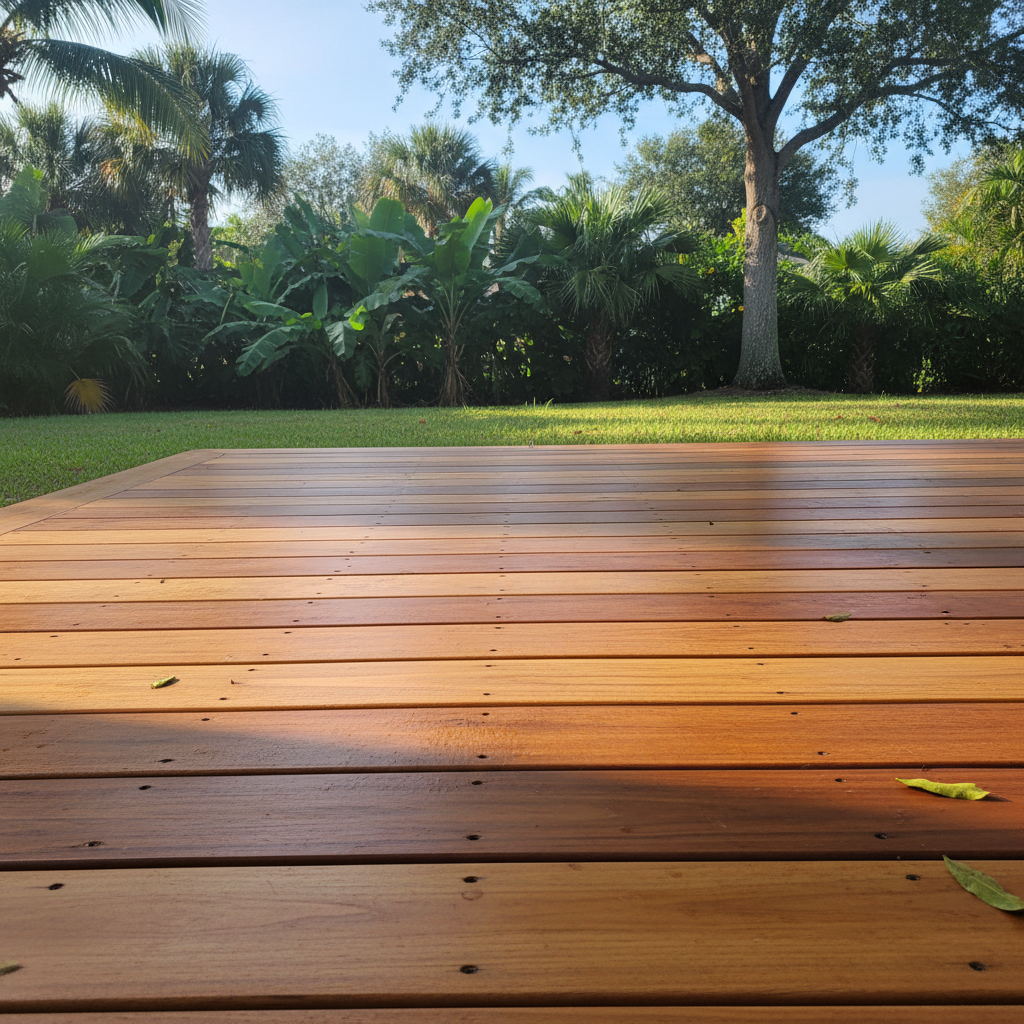
This is a big one, and it's not just about how it looks. Our South Florida climate is incredibly harsh on outdoor materials: intense sun, high humidity, heavy rains, and salt air if you're closer to the coast. You've got a few main choices: natural wood (like pressure-treated pine, cedar, or tropical hardwoods like Ipe), composite decking, and PVC decking. Pressure-treated pine is budget-friendly but needs regular work – cleaning, sealing, staining – to fight off mildew and rot. Tropical hardwoods are beautiful and tough, but they cost more upfront and still need some oiling to keep their color. Composite and PVC decking are the low-maintenance champions. They resist rot, bugs, and fading much better than wood. They don't splinter, and you don't have to stain them. PVC is generally lighter and cooler underfoot than composite, which can be a huge plus when the sun is really beating down. At Pacific Deck Company, we often point folks toward composite or PVC for their long life and easy care in our climate. While the upfront cost is higher, they save you a ton of work in the long run.
What's the deal with hurricane strapping and deck safety in Coral Springs?
Hurricane strapping isn't just a good idea here; it's actually required by code for a very good reason. We live in an area that gets hurricanes, so your deck needs to be built to stand up to those powerful forces. Hurricane strapping means using specific metal connectors – things like clips, ties, and straps – to make the connections between different parts of your deck extra strong. This includes everything from the ledger board attaching to your house, to the joists connecting to beams, and the posts connecting to the footings. These connectors help stop the deck from pulling away from the house or lifting off its foundation during high winds. It's all about creating a continuous load path, so the forces are spread out and the whole structure acts as one solid unit. We use stainless steel or hot-dipped galvanized connectors to prevent corrosion, which is super important with our humidity. It adds a little bit to the cost and labor, but it's absolutely non-negotiable for your safety and to pass inspection.
Will a new deck impact my home's property taxes?
Yes, it will. A new deck counts as a permanent improvement to your property, just like adding a room or a swimming pool. When you get a permit for a deck, that information goes straight to the Broward County Property Appraiser's office. They'll assess the value of the new deck and add it to your property's overall assessed value. This will, in turn, increase your annual property taxes. It's definitely something to include in your budget when you're planning a deck project. The increase usually isn't astronomical for a standard deck, but it's certainly something you should be aware of. It's the trade-off for adding valuable, enjoyable living space to your home.
Are there any specific HOA rules I need to know about for decks in Coral Springs?
Oh, absolutely. If you live in an HOA community – and let's face it, a lot of people in Coral Springs do – you'll have another layer of approval to deal with before you even think about permits. Your HOA will have its own set of rules and architectural guidelines for decks. These can cover everything from approved materials and colors to specific design styles, how far back from property lines it needs to be, and even the maximum size or height of your deck. They'll often require you to submit plans for their review and approval before you can even apply for a city permit. Skipping HOA approval can lead to fines or being forced to change or remove your deck, even if the city approved it. Always check with your HOA first; it will save you a lot of grief down the road.