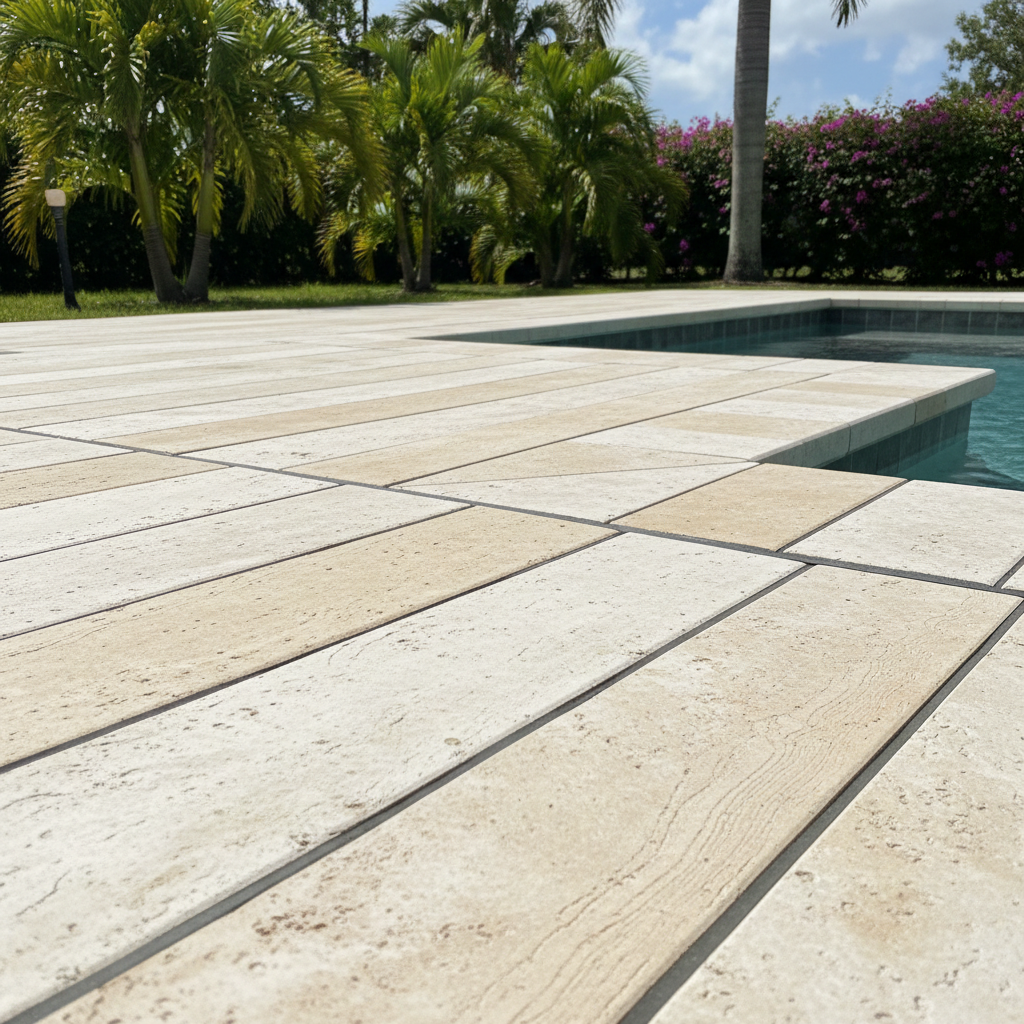
Alright, let's talk about pool decks. Here in Coral Springs, your pool deck isn't just some concrete slab; it's really an extension of your home, a spot for family get-togethers, friends, and honestly, just escaping that intense Florida heat. But with all the sun, rain, and humidity we get, these decks really take a beating. I hear a lot of the same questions from homeowners, so I figured it was time to put everything out there for you, straight from what I've learned on the job over the years.
What are the best materials for a pool deck in Coral Springs?
This is probably the most common question I get, and for good reason. You want something that looks great, feels nice under your feet, and can actually stand up to our crazy South Florida weather. I've worked with just about every material out there, and here’s the real scoop:
- Travertine Pavers: If you're after the very best, this is it. Travertine stays surprisingly cool even under the blazing sun, has a natural texture that helps prevent slips, and drains water really well. It's a type of porous limestone, so it won't get unbearably hot, which is a huge plus for bare feet in July, believe me. It gives you an upscale look that holds up beautifully, too.
- Concrete Pavers: These are a solid, popular choice for many folks. They're sturdy, come in a ton of colors and patterns, and can definitely handle the South Florida elements without much fuss. They're also naturally slip-resistant, which is key when you're around a pool, right? The individual pavers allow for a little movement, which is good news for our local soil conditions.
- Cool Deck Coatings (like Kool Deck or Sundek): If you've got an existing concrete deck that's just too hot to walk on, these spray-on or rolled-on coatings are a lifesaver. They create a textured surface that cuts down heat absorption significantly – we're talking about taking a surface from 130-150 degrees Fahrenheit down to something much more comfortable. They also add great traction, which is always a bonus.
- Coral Stone: If you're dreaming of that true tropical vibe, coral stone is fantastic. It's a natural limestone with tiny embedded seashells, giving it a really unique look. Just like travertine, it tends to stay cooler than many other materials and is naturally slip-resistant.
What I'd generally suggest you avoid for a primary pool deck surface is plain, unsealed concrete or certain kinds of smooth tile. They can get scorching hot and slick as ice when wet, which nobody wants. Wood, honestly, also needs a ton of maintenance in our climate to keep it from rotting and giving you splinters.
Does my pool deck need a permit in Coral Springs?
Absolutely, yes. Any significant work on your pool deck, especially if you're building something new or doing a major renovation, will require a permit from the City of Coral Springs Building Department. This isn't just a suggestion, it's the law. They'll want to see site plans, and they'll make sure everything complies with zoning laws, setbacks, and drainage requirements. Even if you're just resurfacing, you might need a permit, particularly if it involves structural changes or changes to the tile or coping. We always handle the permitting process for our clients at Pacific Deck Company, because it can be a real headache if you don't know all the ins and outs. It typically takes a few weeks, so you'll want to factor that into your project timeline.
How do I keep my pool deck from getting so hot?
This is a big concern here in South Florida. Nobody wants to scorch their feet just trying to get into the pool. The best way to deal with heat is through your choice of material and color. Lighter colors reflect more sunlight, so they naturally stay cooler. That's why materials like travertine and coral stone are so popular around here; they're naturally light-colored and porous, which really helps them stay cool, even on the hottest days.
If you already have a concrete deck, a "cool deck" coating is your best option. Products like Kool Deck or Sundek are specifically made to reduce surface temperatures, making it comfortable to walk on barefoot, even when it's really baking outside.
What's the difference between resurfacing and replacing a pool deck?
Good question. Most folks think they need a whole new deck when they spot some cracks or stains, but that's not always the situation. Resurfacing is when we put a new layer of material over your existing, structurally sound concrete slab. Think of it like giving your deck a facelift, you know? It's much faster, less disruptive, and usually a lot cheaper than doing a full replacement.
You're probably looking at resurfacing if your deck has cosmetic issues like fading, minor cracks, or just general surface wear, but the concrete underneath is still solid. Resurfacing costs typically run from $3 to $15 per square foot. A full replacement, which can be $15 to $25 per square foot, is only really needed if your existing slab has serious structural problems – I'm talking major settlement, deep cracks wider than a quarter-inch, or rebar corrosion. That involves demolition, hauling away the old material, and pouring a new slab, which is a much bigger job, as you can imagine.
How do I maintain my pool deck in Florida's climate?
Maintenance is really important, especially with all our sun, rain, and humidity. Here's what I tell my clients:
- Regular Cleaning: Sweep off leaves and debris often, that's step one. For a deeper clean, use a soft brush and a mild detergent. You can use a pressure washer, but be careful, especially on softer materials or if you have a coating. Too much pressure can actually damage the surface.
- Sealing: This is huge. Sealing protects against UV damage, moisture, and staining. Depending on your material, you'll need to reapply a waterproof sealant every few years. For pavers, it might be every 2-3 years; for some coastal properties, it could even be annually.
- Prompt Repairs: Don't ignore small cracks. Water can get in there and cause much bigger problems down the line. Address them quickly with a quality crack filler.
- Drainage: Make sure water is draining off your deck and away from your home's foundation. Clear any drainage paths regularly. Proper slope is essential here, that's for sure.
- Saltwater Pools: If you have a saltwater pool, rinse your deck weekly. Saltwater can cause long-term damage to concrete, wood, and stone if it's left to sit there.
The key, honestly, is consistency. A little preventative care really goes a long way in extending your deck's life and keeping it looking good for years.
What about drainage? My deck always has puddles after a storm.
Puddling is a common issue around here, especially with our afternoon downpours. Proper drainage really starts with the initial design and installation. Your deck needs a slight slope, usually about 1/8 to 1/4 inch per foot, to direct water away from the pool and your house. It's a small detail, but it makes a big difference.
If you're dealing with existing puddles, we can look at solutions like channel drains or slot drains. These are systems designed to collect water quickly and efficiently. Channel drains are installed in hardscaped areas and create a linear pathway for water, stopping those annoying puddles. Slot drains are even more discreet, with the body of the drain hidden, offering a minimalist look while still moving a lot of water. Sometimes, though, it's just a matter of clearing existing drains or making sure the landscaping isn't pushing water back onto the deck.
Look, your pool deck is an investment in your Coral Springs home and, really, your lifestyle. Taking the time to understand your options and maintain it properly will make sure you get to enjoy it for many years to come. If you've got more questions or want a real assessment of your deck, just give us a call at Pacific Deck Company. We're always happy to help out.