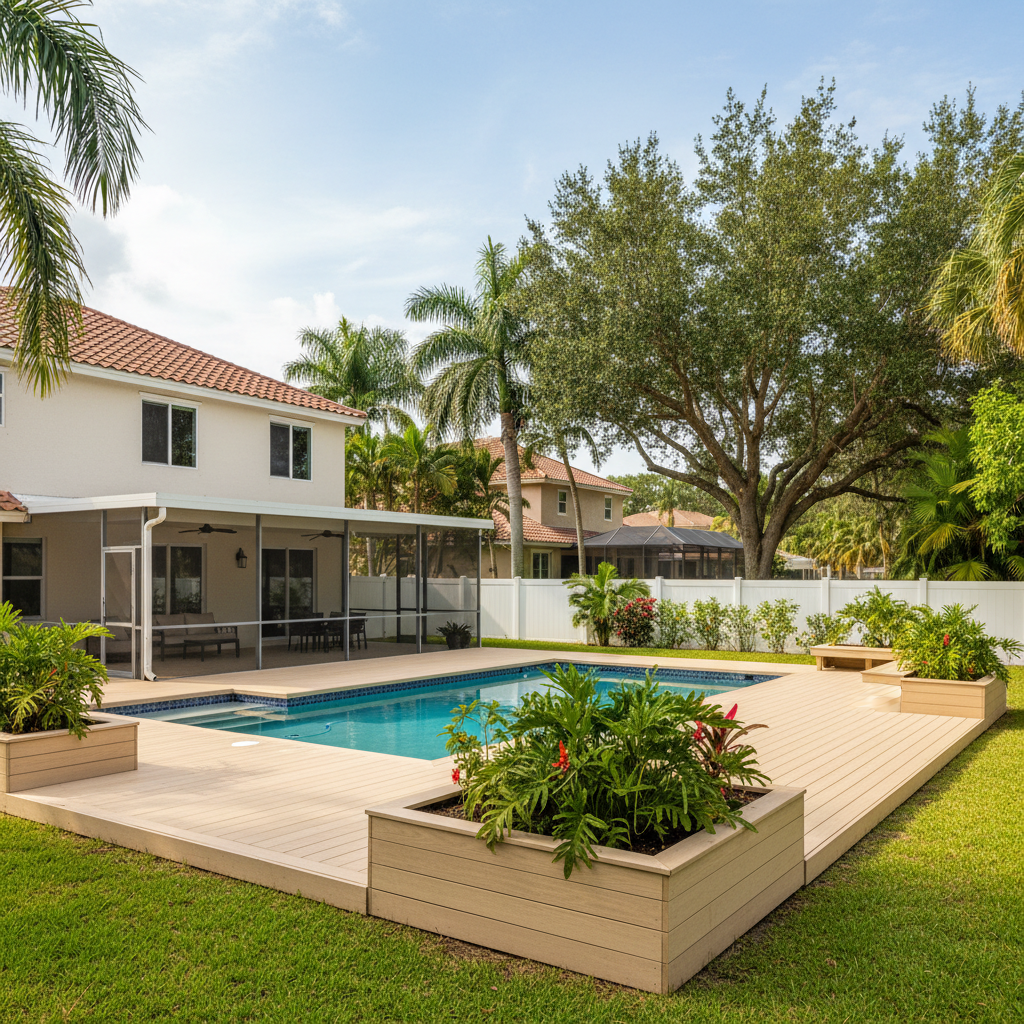
Alright, let's talk pool decks. Around here, especially in places like Eagle Trace or Wyndham Lakes, a pool isn't just a luxury; it's practically a necessity. And what's around that pool? A deck, right? But I see a lot of folks settling for the same old boring concrete, or worse, a deck that's already cracking and fading after just a few years. It's a shame, really.
You've got options, and frankly, you deserve better than 'just okay' for something you're going to be looking at and walking on every single day. Especially with our South Florida sun beating down and the humidity trying to chew through everything.
Why Your Pool Deck Matters More Than You Think
Look, your pool deck isn't just a border. It's the stage for your backyard life. Kids running around, barbecues, lounging with a book – it all happens there. So, it needs to be safe, comfortable, and look good. A good pool deck adds value to your home, sure, but more importantly, it adds to your quality of life. A bad one? Well, that's just a headache waiting to happen, from trip hazards to ugly stains.
We're not just talking about how it looks, either. Safety is huge. You want a surface that won't get dangerously slippery when wet, and that's going to stay cool enough to walk on barefoot even in July. That's a big deal when the sun's reflecting off the water and the concrete's baking, wouldn't you agree?
Common Pool Deck Materials We Use Around Here
You've got choices beyond plain old concrete. And trust me, some choices are way better for our climate than others. Here's what I generally recommend and why:
- Pavers: These are super popular, and for good reason. They come in all sorts of colors, shapes, and textures, so you can really customize the look. They're also great for drainage – water just seeps through the cracks between them, which is a big plus during our afternoon downpours. If one gets damaged, it's easy to swap out just that one paver instead of tearing up a whole slab. Plus, they tend to stay cooler than solid concrete.
- Travertine: Now we're talking luxury. Travertine is a natural stone, and it looks fantastic. It's naturally porous, which means it doesn't get as scorching hot as concrete, and it offers pretty good slip resistance even when wet. It's a bit more of an investment upfront, but the look and feel are hard to beat. I've put travertine around pools in communities like Heron Bay, and they always look stunning.
- Stamped Concrete: If you like the idea of concrete but want more flair, stamped concrete can mimic the look of pavers, natural stone, or even wood. It's more durable than a simple concrete pour and gives you a lot of design flexibility. The key here? Proper sealing to protect it from the elements and keep it looking good.
- Composite Decking: While not as common directly around the pool's edge because of its heat retention, composite can be a great option for an elevated deck area or a transition zone leading to the pool. It's low maintenance and won't rot or splinter, which is a big win in our humid environment.
What about wood? Honestly, for a pool deck right next to the water, it's a tougher sell in South Florida. The constant wet-dry cycle, the sun, and the humidity mean a lot more maintenance. If you're set on a wood look, I'd steer you towards a composite that mimics wood instead.
Local Conditions: Why Coral Springs Isn't Like Everywhere Else
You can't just pick a material off a national catalog and expect it to perform perfectly here. We've got a few unique challenges:
- The Sun: It's relentless. Materials need to be UV resistant so they don't fade or break down quickly.
- Humidity & Rain: We get a lot of both. This means materials need to handle constant moisture without rotting, growing mold, or becoming dangerously slick. Proper drainage is non-negotiable.
- Soil Conditions: Our sandy, sometimes high-water-table soil can be tricky. You need a solid foundation for any deck, especially around a heavy pool. We've seen plenty of decks sink or crack because the base wasn't prepped right for our local ground.
- Salt Air (even inland): While Coral Springs isn't right on the beach, we still get some of that coastal air. And if you've got a saltwater pool, that's another factor. Materials need to resist corrosion.
That's why local expertise really matters. Someone who's been building decks in Coral Springs for years, like us at Pacific Deck Company, knows these conditions inside and out. We know what works, what doesn't, and why. We're not guessing; we're applying years of experience right here in your neighborhood.
Planning Your Pool Deck Project
When you're ready to upgrade or build new, think about a few things:
- Your Budget: Be realistic. Good materials and good craftsmanship cost money, but they save you headaches and expense down the line.
- Your Style: Do you want modern, tropical, classic? Your deck should complement your home and your landscaping.
- How You Use It: Is it for quiet lounging, big parties, or a splash pad for the kids? This will influence material choices and layout.
- Permits: Don't forget this. The City of Coral Springs has rules, and you'll need permits for most deck projects. A good contractor will handle all that for you.
Don't settle for a mediocre pool deck. It's a huge part of your outdoor living space, and with the right materials and the right team, you can have something that's safe, beautiful, and built to last through our Florida seasons. Give us a call at Pacific Deck Company when you're ready to talk through your ideas. We're happy to share what we've learned working on homes just like yours.